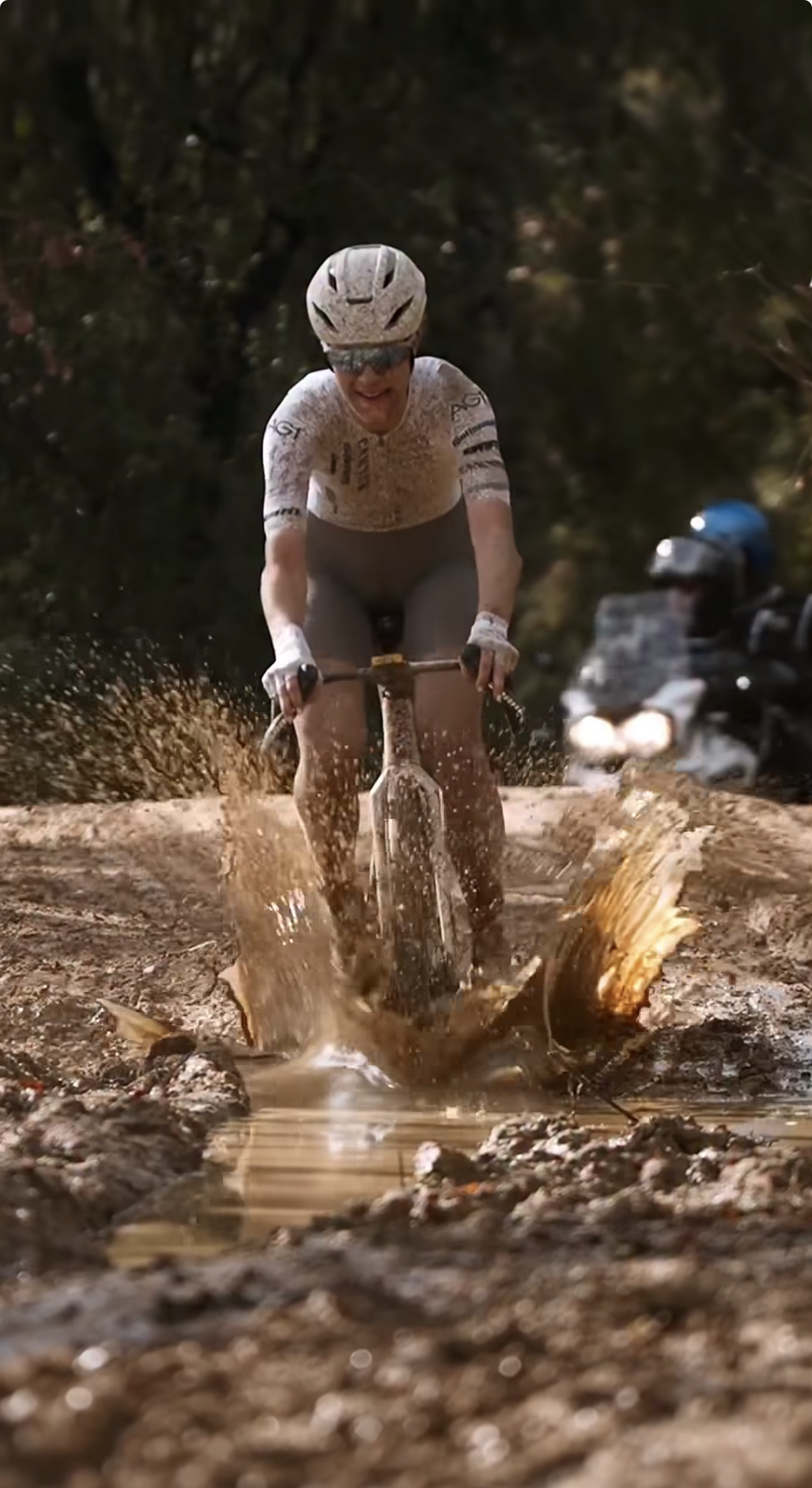
Santa Vall Gravel - The New Frontier
Santa Vall Stage 1 – What the Race Really Looked Like (and what it means for you)
Santa Vall opened the gravel season the way these Girona races usually do.
Cold start. Big field. Nervous energy.
And within the first few kilometres, the race was already splitting.
If you’re new to this scene, or you’re targeting races like Santa Vall or Traka this year, here’s the honest truth:
The race isn’t decided at the end.
It’s decided at the start.
---
## The Reality of the Course
Stage 1 was around 115 km with about 1,600 m of climbing. On paper, that sounds like a long endurance day.
It wasn’t.
It rode like two completely different races:
Phase 1: The first 10–15 minutes
Full gas. Fighting for position. Small climbs ridden well above threshold. Groups forming immediately.
Phase 2: The remaining four hours
Settle into whatever group you earned. Fuel. Manage the damage. Try not to lose contact.
The Girona terrain makes this inevitable. Wide gravel funnels into narrow sectors and short climbs. If you hit those at the back, gaps open. Once they open, they don’t come back.
There is no gentle start anymore.
---
## The Moment That Actually Matters
Not the final hour.
Not the biggest climb.
The decisive moment is the first selection.
The front group forms early and stays small. If you’re there, the race feels controlled. Better lines. Less braking. More cooperation.
If you’re not there, your day becomes chasing, bridging, or riding alone.
This is the first thing newer riders need to understand:
Your start position shapes your entire race.
---
## The Level at the Front
The front end of gravel has changed a lot.
Riders are showing up in February already sharp. The pace reflects that:
- Repeated 5–10 minute efforts above threshold
- Constant surges over rises and out of corners
- Very little steady riding
This isn’t a steady endurance event anymore. It’s endurance built on top of repeated intensity.
You can have great FTP and strong endurance.
But if you can’t handle those early efforts, the race is gone before your strengths even matter.
---
## What Actually Separates Riders
It’s not just fitness.
Three things mattered more than most people realise:
Positioning
Start too far back and you burn matches just moving up. Every corner becomes an accordion. Every climb becomes a sprint.
Confidence on the surface
Loose corners. Fast gravel. Narrow lines. Hesitation creates gaps, and gaps cost a lot of energy to close.
Fueling early
The intensity tricks people into waiting. By the time they start eating, they’re already behind.
Carbs need to start early — even when your heart rate is high.
---
## The Biggest Mistake New Gravel Racers Make
“I’ll ride steady and move up later.”
That used to work.
It doesn’t anymore.
The front groups form early and they stay away. There’s too much depth now, and the cooperation at the front is strong.
If you miss the first split, you’re not racing the leaders anymore. You’re managing your own race.
That’s not failure. But it’s a different day.
---
## What This Means for Your Preparation
If you’re targeting Girona gravel races, your training should reflect what actually happens out there.
You need:
- The ability to go hard early, from cold
- The ability to repeat efforts after a few hours
- Confidence riding fast in a group on gravel
- A fueling plan you can execute under pressure
This isn’t about becoming a different athlete.
It’s about matching the demands of the first 15 minutes.
---
## The Takeaway
Santa Vall wasn’t won because someone was the strongest after five hours.
It was won by riders who:
- Started aggressively
- Positioned well
- Made the first group
- Then rode smart for the rest of the day
That’s modern gravel.
If you’re building into this scene, don’t measure success by results straight away.
Measure it by where you are after the first selection.
If each race you’re a little further forward, a little less stressed, and staying in better groups for longer — you’re moving in the right direction.
That’s how progress actually looks in gravel.